
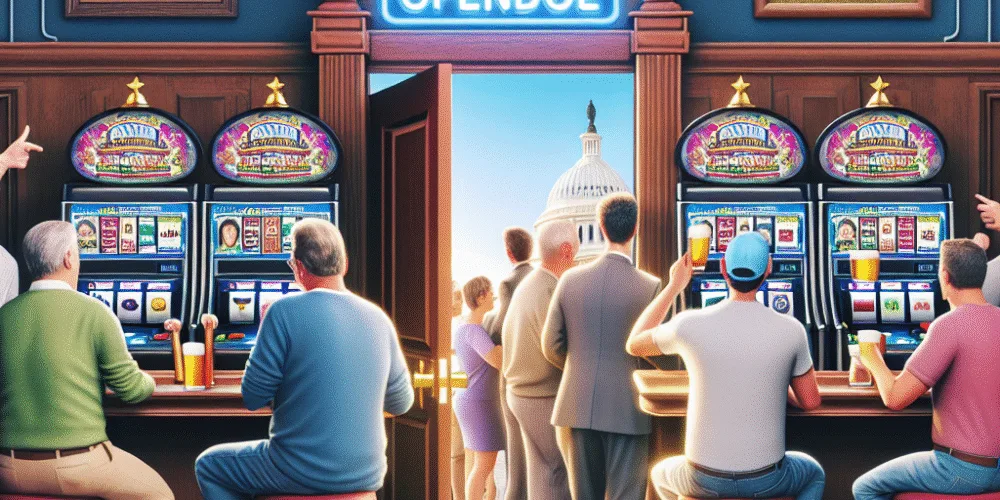
In a surprising move that’s poised to reshape the landscape of local entertainment and the economy, several states across the U.S. have passed new legislation allowing slot machines in bars and restaurants. This landmark decision, intended to boost local businesses and increase state revenues through gaming taxes, was signed into law last Thursday and has already begun rolling out in select locations.
The legislative push, which gained traction earlier this year, aims to replicate the success seen in regions like Nevada and New Jersey, where casino-style entertainment contributes significantly to the local economy. Proponents argue that the introduction of slot machines will not only provide a new revenue stream for business owners but also create new jobs and attract tourism, further invigorating the local economy.
Under the new laws, each establishment eligible for a gaming license can host a limited number of slot machines, depending on the size and capacity of the location. The state gambling commissions have been tasked with overseeing these operations, ensuring that all activities comply with strict regulatory standards aimed at promoting responsible gambling.
Reaction to this development has been mixed. While many business owners are enthusiastic about the potential increase in customers and revenue, some community leaders and residents express concerns about the possible social implications, including an increase in problem gambling. In response, several states have established provisions requiring a portion of the gambling revenue to fund gambling addiction recovery programs and other community services.
Economic analysts predict a significant boost to local economies, particularly in areas hit hard by recent economic downturns. According to a recent report by the Gaming Economic Association, the introduction of slot machines in bars and restaurants could increase local revenues by as much as 10% in the first year alone, with the potential for further growth.
The rollout of slot machines will occur in phases, with pilot programs already launched in a handful of cities. Feedback from these pilot locations will help shape final regulations and expansion plans. Meanwhile, technology providers have developed specialized software and hardware to ensure these new gaming machines meet state security and fairness standards.
One of the early adopters, a bar owner in Columbus, Ohio, shared his optimism about the new law: “This could really change the game for us. We’ve been looking for ways to draw more people and give them more entertainment options. Slot machines could be just the thing to bring more life to our business.”
However, not everyone shares this enthusiasm. A community leader from Richmond, Virginia, voiced concerns about the potential negative impacts: “We must be careful not to create more problems than we solve. It’s essential that the revenue generated from these machines is also used to support our community and address any issues that arise.”
As states begin to experiment with this new model of local gambling, all eyes will be on the economic outcomes and social impacts. The success of these programs could potentially lead to broader adoption and possibly even influence federal regulations on gambling.
In conclusion, the integration of slot machines into local bars and restaurants marks a significant shift in the gambling landscape. With careful implementation and oversight, this initiative could serve as a valuable economic catalyst, though it remains imperative for stakeholders at all levels to balance economic benefits with social responsibilities. As this experiment unfolds, it will undoubtedly provide important insights into the future of local gambling and its role in American society.

David Farbacu is a seasoned writer with a passion for games, gaming, casinos, and Xbox. With a wealth of experience in the industry, David brings insightful reviews, comprehensive guides, and engaging articles that cater to both casual gamers and hardcore enthusiasts. His expertise spans across various gaming platforms and genres, making him a go-to source for the latest trends and developments in the gaming world.